Last updated: October 31, 2026
Quick answer: A STEM kit is a boxed set of materials and instructions for science, technology, engineering, and math learning; many take about 15 to 30 minutes for a first build. In plain English, a STEM kit is a learn-by-doing kit that turns an abstract idea into a small experiment, build, or coding task. For general consumer-safety guidance on kits and small parts, consult a professional or refer to the U.S. Consumer Product Safety Commission (CPSC) guidance at https://www.cpsc.gov/ and the American Academy of Pediatrics at https://www.healthychildren.org/.
What a STEM kit actually is
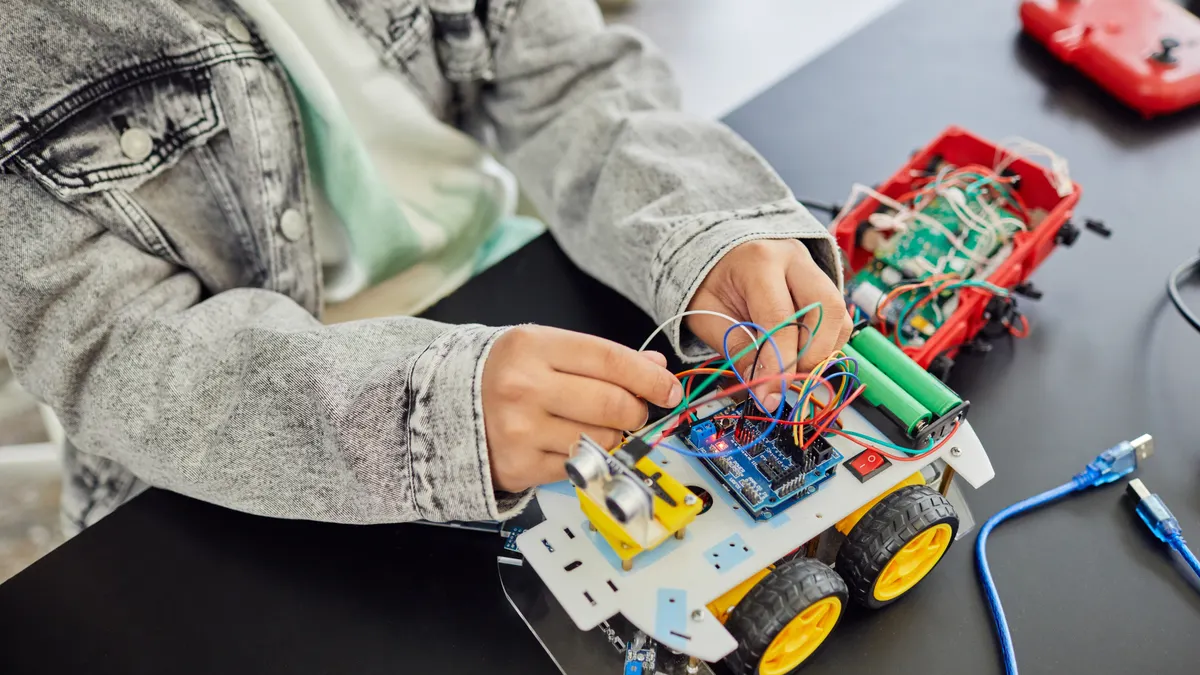
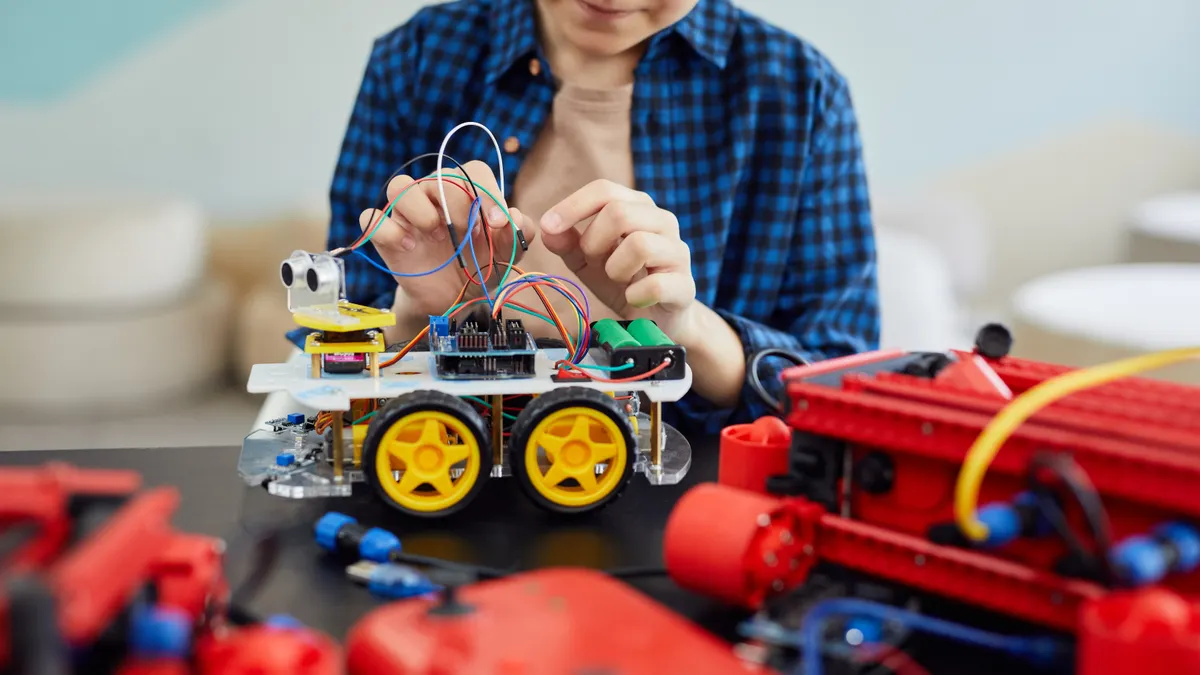
A STEM kit is a structured learning package, not just a pile of parts. It usually includes a few materials, a worksheet or guide, and a project with a clear outcome, such as a circuit that lights an LED, a bridge made from sticks, or a measurement activity that teaches patterns and data.
That structure matters. A general toy may invite free play, and a craft kit may focus on decoration. A STEM kit has a built-in learning goal. The goal might be basic circuitry, simple machines, magnetism, coding logic, or fraction practice. The point is not only to make something that looks finished. The point is to connect the build to a concept a learner can name.
In STEM education, that connection is the whole job. A child can move pieces around and still miss the lesson. A STEM kit tries to prevent that by pairing the hands-on task with a concept. For example, a science kit might include a mini volcano, but a STEM version is more likely to explain reaction, measurement, and observation instead of stopping at the eruption. An engineering kit may ask for a structure that spans 20 cm, while a math kit might ask the learner to count, compare, or measure.
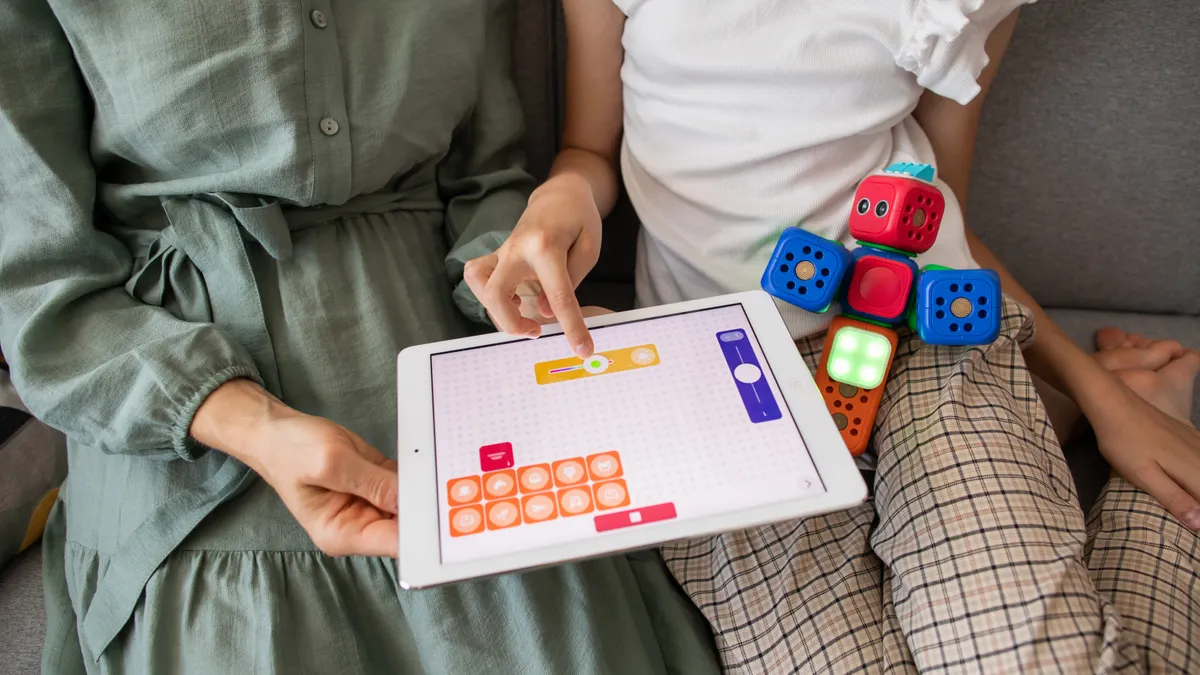
The category also overlaps with coding activity kits and engineering project kits, which is why shoppers get confused. A coding activity may live inside a STEM kit, but not every STEM kit is a coding kit. The broader label includes science kits, building kits, and math-focused kits too. That is why a STEM kit is better understood as a learning format than as one specific product.
How a STEM kit works from box to lesson
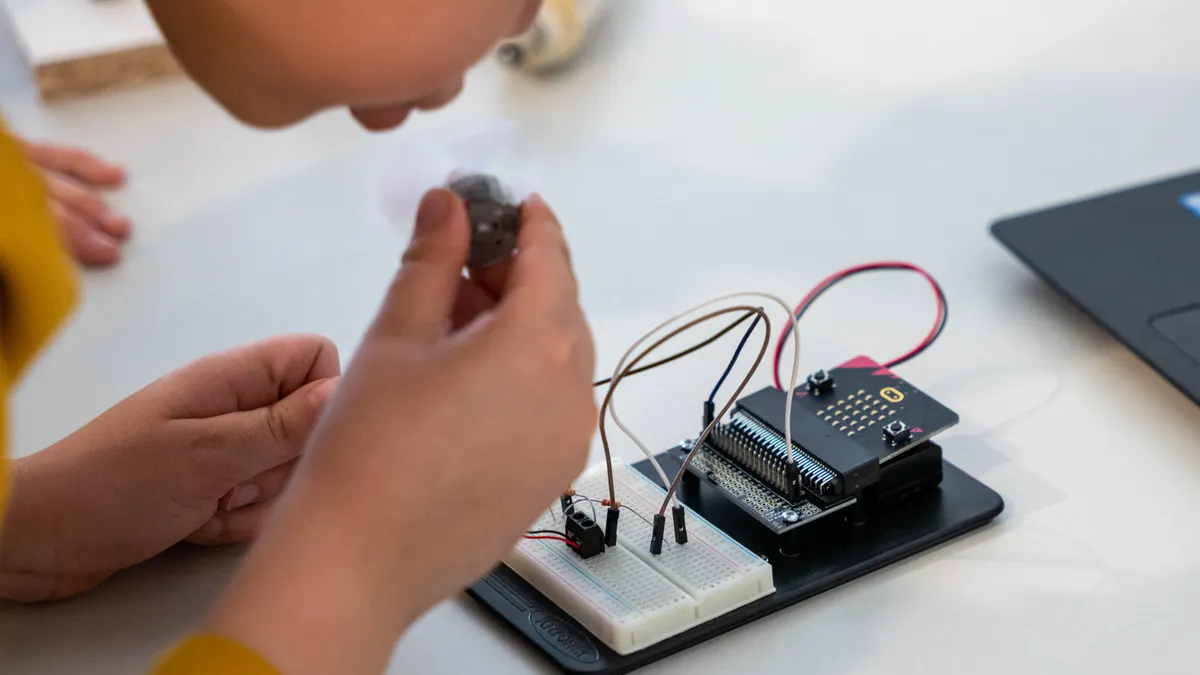
Because of that structure, a STEM kit works by guiding a learner through a sequence: set up, try, observe, adjust, and explain. Strong kits do not rely on a single “right answer”; instead, they ask the learner to build, test, and notice what changes when one variable shifts.
Here is the usual flow:
- Open the kit and sort the pieces into groups, such as connectors, fasteners, instructions, and tools. This often takes 5 to 10 minutes and can help prevent missing parts from getting lost in the first minute; for safety and age-fit, consult a professional or review CPSC guidance before use.
- Read the project goal before touching the parts. A clear goal might be “build a paper bridge that spans 15 cm” or “connect a simple circuit so a light turns on.” This helps the learner know what success looks like.
- Follow the first build exactly once. The first round is usually meant to establish the baseline, not to improvise. That baseline makes later changes meaningful.
- Test the result and watch what happens. A good STEM kit asks for observation, such as whether a wheel turns freely, whether a circuit completes, or whether a structure bends under weight.
- Change one thing at a time. Move a magnet, or alter the angle of a ramp. One variable at a time makes the cause-and-effect visible instead of muddy.
- Record what changed in one sentence or one chart. A simple note like “the bridge held more books after I added a center support” turns play into learning.
This is where a STEM kit differs from a random activity box. A craft project may end when the object looks nice. A STEM kit is trying to build a mental model. It should leave behind a concept the learner can reuse later, such as “triangles are stable,” “electric current needs a complete path,” or “measurement has to stay consistent.”
One useful way to judge a kit is whether the steps make sense without an adult rewriting them. If every instruction needs translation, the kit may be better as a guided classroom tool than a self-led one. On the other hand, a kit that is too open-ended can become frustrating because the learner never knows what result to aim for.
What counts as STEM inside the kit?
A STEM kit counts as STEM when the activity teaches at least one of the four areas in a hands-on way. Science kits focus on observation and explanation. Technology kits often involve simple devices, circuits, or code. Engineering kits center on design, structure, and problem-solving. Math kits use counting, shape, patterns, measurement, or logic.
A useful sign is the learning task, not the packaging artwork. If the kit asks a learner to compare 3 materials, measure a 10 cm span, follow a sequence of commands, or test which structure holds more weight, it is working in STEM territory. If it only asks for decoration or assembly without a concept behind it, it is closer to a craft.
This distinction matters because many products use “STEM” as a marketing word. A box with stickers, glitter, and a single token fact about space is not the same thing as a science kit with an experiment, a written hypothesis, and a result to observe. The label should point to the learning method, not just the theme.
A good STEM kit also matches the difficulty to the learner. A young beginner may need large parts, short instructions, and a single outcome. An older learner may be ready for a multi-step build, a troubleshooting stage, or a more open design challenge. The right level usually matters more than the subject title on the front of the box.
This is why STEM kits show up in classrooms, after-school programs, libraries, homeschool shelves, and gift boxes. They fit settings where a person needs a quick, concrete lesson with materials already gathered. They are also common in maker spaces because they compress setup time. Instead of collecting batteries, wires, craft sticks, or measuring tools one by one, the kit brings the essentials together.
For a broader buying and age-fit view, the hub article on STEM kits for kids can sit alongside this definition without repeating it.
STEM kits vs. general toys and craft kits

A STEM kit is different from a general toy because it is built around a learning outcome, not only entertainment. A toy may still teach something, but the lesson is often incidental. A STEM kit makes the lesson the point of the activity.
The difference from a craft kit is even sharper. A craft kit usually rewards appearance. If the finished item looks neat, the project is complete. A STEM kit rewards understanding. The finished item matters, but only because it proves a concept worked. A paper airplane kit, for example, becomes STEM when it asks the learner to compare wing shapes, measure distance, and revise the design after a test flight. Without that learning loop, it is just a folded-paper activity.
This is why packaging can be misleading. Bright colors, a robot face, or the word “science” on the box do not guarantee a STEM experience. The checklist is simpler: does the kit require thinking, measuring, testing, or adjusting? Does it explain why the result changed? Does it ask the learner to use evidence from the activity?
There is a trade-off here. A kit that is strongly guided can be excellent for first-time learners, but it may leave less room for creativity. A looser kit can invite invention, but it may also confuse a beginner. That is why some of the more effective kits sit in the middle: enough structure to get a result in 15 to 30 minutes, enough freedom to make a second attempt, and enough explanation to connect the action to the idea.
A STEM kit is not automatically better than a toy or craft project. It is better only when the goal is learning through doing. If the goal is imagination, relaxation, or decoration, a toy or craft kit may be the right choice.
How to tell if a kit is genuinely educational
A STEM kit is genuinely educational when it teaches a concept, not just a completion habit. That means the learner can usually answer three questions after the activity: what did I do, what changed, and why did it change?
Use this quick check before buying or using one:
- Look for a concept on the box or guide. Terms like force, motion, balance, circuit, pattern, measurement, or data point to real learning. If the language stays vague, the educational value may be thin.
- Check for a cause-and-effect step. A good kit asks the learner to change one variable, such as angle, weight, sequence, or connection. Without that, the activity may stay decorative.
- See whether the instructions explain the why. A project that only says “do this” teaches less than one that says “do this because the current needs a closed path.”
- Notice whether the learner has to think, not just assemble. A 12-piece model can still be passive if every part has a single obvious place. A better kit includes a prediction or decision point.
- Look for reuse. Strong kits often allow a second build, a redesign, or a different experiment using the same parts.
A limitation is worth naming plainly: not every learner needs a kit to get a STEM lesson. A kitchen scale, measuring cups, recycled cardboard, and a ruler can already teach fractions, mass, and geometry. A kit is useful when structure, convenience, or confidence matters. It is less useful when a family already has the materials and knows how to guide the activity.
This is where generic articles often go wrong. They treat “educational” as a guarantee, but it is not. A STEM kit can be useful, mildly useful, or poorly designed. The learning value depends on the task design, the clarity of the instructions, and whether the learner is asked to observe a result rather than simply finish a product. For families weighing options, the advice from the U.S. Department of Education and the National Science Teaching Association is to focus on the learning task, not just the label.
Where STEM kits show up and why people use them
STEM kits show up anywhere a quick hands-on lesson is useful, including classrooms, science fairs, homeschool lessons, camps, libraries, and gift tables. They are popular in places where the goal is to teach a topic in 20 to 60 minutes without gathering supplies from scratch.
They also solve a practical problem. Many teachers, parents, and program leaders need an activity that is ready to use, easy to reset, and simple to explain. A prepacked kit saves preparation time and reduces the chance that a lesson fails because a key item is missing. That is one reason a science kit or engineering project kit can be more useful than building everything from loose parts.
There is a second reason people choose them: confidence. A person who does not feel strong in science, math, or coding can still guide a structured kit with a clear set of instructions. That does not replace a real lesson, but it lowers the barrier to starting one.
Because of that, a STEM kit is not the best choice for every situation. It is a weaker fit when the learner already knows the basics and needs a deeper challenge, when the activity needs many repeated trials, or when the lesson should be tied to open-ended exploration instead of a boxed format. In those cases, loose materials or a longer project may work better.
Think of a STEM kit as a compact tool for hands-on learning. It is best when you want one concrete lesson, a limited amount of setup, and a visible result in a short time. It is not best when the goal is free play, advanced experimentation, or a project that should grow in many directions.
What a STEM kit is, in one sentence
A STEM kit is a hands-on learning set that uses guided materials and projects to teach science, technology, engineering, or math through doing. It becomes valuable when the activity makes a concept visible, measurable, or testable, not just complete.
Key takeaways
- A STEM kit is a learning tool first and a play item second.
- The more effective kits include a clear concept, a step-by-step task, and a result that can be observed.
- STEM kits can cover science, technology, engineering, or math, but they do not need to cover all four at once.
- They are useful in classrooms, homes, and group settings because they reduce setup time.
- A bright box is not proof of quality; the learning design is what matters.
What does STEM stand for?
STEM stands for science, technology, engineering, and math. Those four areas are the basis of the term, and a STEM kit usually teaches one or more of them through a hands-on task. The activity might focus on a science experiment, a build, a circuit, or a measurement exercise.
Are STEM kits educational?
Yes, STEM kits can be educational when they teach a concept and not just a finished object. A good kit asks the learner to observe, compare, build, test, or change one variable. A weak kit may still be fun, but it will not teach much beyond assembly or decoration.
What age are STEM kits for?
STEM kits can be made for many ages, from early elementary through teens and beyond. The right age depends on part size, instruction length, and how much reading or problem-solving the activity requires. A beginner usually needs fewer steps and clearer guidance than an older learner.
Drafted with AI; not yet reviewed by a person.