Last updated: October 22, 2026
Quick Answer: For most families, one well-chosen STEM kit is enough to start; the best fit is the one the child will actually use, usually a focused kit that can be finished in 20 minutes to 3 hours without heavy adult rescue. Educational STEM Kits for Kids — The Complete Guide works best when it matches a child’s age, attention span, and tolerance for frustration. The right kit can turn a pile of parts into a 20-minute win or a 3-hour argument, so the real question is not “Which kit is smartest?” It is “Which kit will actually get used, teach something real, and not end up in a closet after one hard afternoon?”
A good STEM kit teaches one concept cleanly, gives enough structure to avoid chaos, and leaves room for the learner to make choices. A bad one uses flashy packaging, vague promises, and too many tiny pieces. That difference matters more than brand names. It also matters for the adult in the room, because a kit that works for a 7-year-old who loves gears may not be the right fit for a 10-year-old who wants coding or a 5-year-old who still puts everything in their mouth.
What counts as a STEM kit for kids?
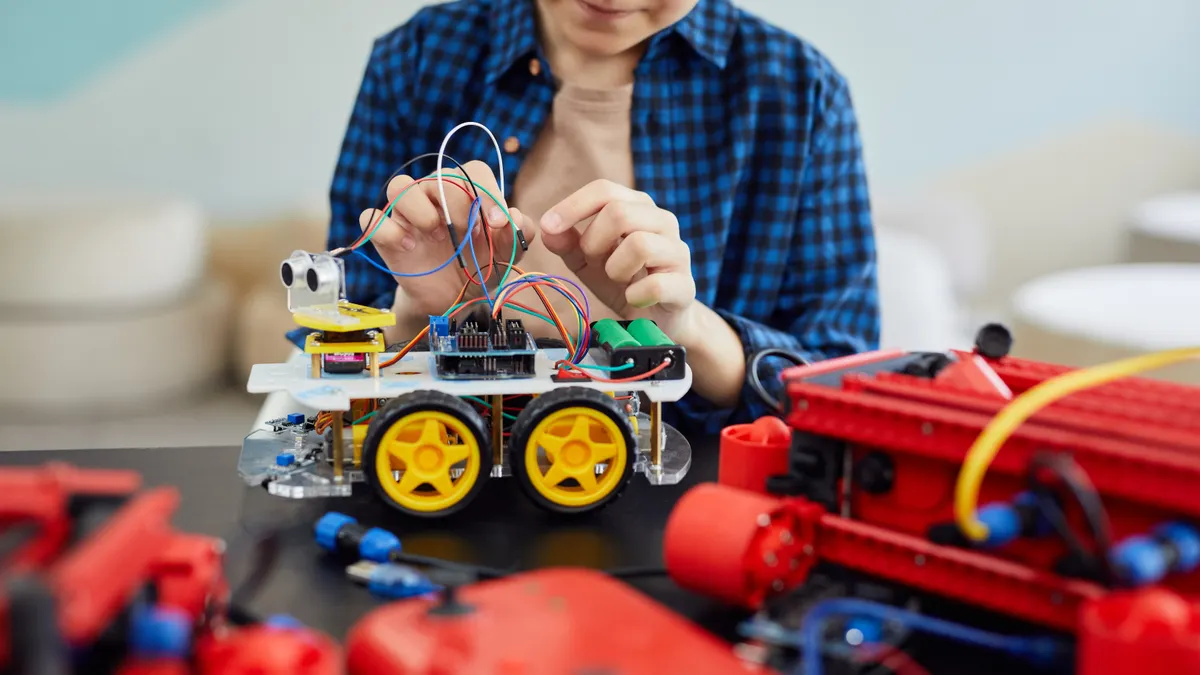
A STEM kit for kids is a boxed activity set built around science, technology, engineering, or math, usually with enough materials to complete one or more guided projects. It may include gears, circuits, sensors, magnets, craft parts, coding cards, building pieces, or simple lab tools. The useful question is not whether the box says STEM. The useful question is what the kit makes a child do with hands and brain in the same session.
A real STEM kit usually does three things. First, it introduces a concept such as force, balance, light, electricity, measurement, or iteration. Second, it gives a physical task: build a bridge, wire a circuit, sort a pattern, code a movement, or test a material. Third, it ends with feedback that can be seen or measured. That feedback might be a light turning on, a motor spinning, a tower standing, or a code sequence working after two failed tries.
The label alone is not enough. Some products use “STEM” as a marketing wrapper around simple crafts with one science fact printed on the insert. Those can still be fun, but they are not the same as a kit that asks a child to troubleshoot, compare, revise, and try again. The better kits also make the underlying idea visible. A circuit kit should show how current moves. A bridge kit should reveal load and support. A coding kit should show logic, sequence, and condition. If the learning stays hidden inside a cute activity, the box is doing more branding than teaching.
For families, the value is practical: a STEM kit reduces setup time, supplies, and planning. Instead of buying loose batteries, paper clips, magnets, and random plastic parts, the adult gets a curated set with a lesson path. That convenience is real. So is the trade-off. Kits cost more per project than loose materials, and a strong child may outgrow a beginner kit fast. The trick is choosing a kit whose difficulty matches the current stage, not the stage adults wish the child had reached.
See also: benefits of STEM toys, how to choose educational toys, and best toys by age.
How do I choose the right STEM kit for my child?
Choose the right STEM kit by matching age, skill level, project count, and supervision needs to the specific child, not the gift occasion. A kit with the right topic but the wrong complexity will frustrate a beginner or bore an experienced builder. The selection process usually starts with the learner’s current behavior, not the recommended age printed on the box.
Start with age as a rough gate, not a final answer. Age labels usually reflect safety and small-part rules as much as cognitive fit. A 6-year-old who loves puzzles may handle a more structured engineering set than a 7-year-old who gets overwhelmed by instructions. A 10-year-old who likes electronics may need less hand-holding than the box suggests. The best match comes from watching how much scaffolding the learner needs. Does the child want clear steps, or does the child enjoy open-ended tinkering?
Then look at the type of thinking the kit asks for. Coding kits teach sequence and logic. Chemistry-style kits teach observation and cause/effect. Physics kits often teach force, motion, and balance. Engineering kits build planning and revision. Math kits work best when they are tied to physical action, such as geometry blocks, measurement games, or logic puzzles. A lot of parents buy the subject they remember from school, then discover that their child actually wants motion and construction, not vocabulary and worksheets.
The physical format matters too. A small box with 1–3 projects may be ideal for a new learner who needs a quick finish. A multi-project kit with 10 or more builds can be great for a child who likes repetition and variations. If the kit needs AA batteries, a smartphone, scissors, or adult assembly, that should be clear before purchase. A kit that depends on hidden extras is a common source of disappointment. For more buying context, see age-appropriate toys and toys that build logic.
Safety is part of the decision, especially for younger children. Look for age-appropriate parts, clear choking warnings, and material choices that fit the child’s stage. Glue guns, soldering, glass beakers, and sharp tools belong in older-kid kits with direct adult help. For younger children, bigger components and non-toxic materials are a smarter pick. The stronger the kit, the less it asks adults to improvise safety at the table.
If the goal is gifting, choose the kit that can be completed in one sitting or in a small number of sessions. A box that looks impressive but requires a full weekend and patient setup can become a burden, not a present. If the goal is sustained learning, choose a kit with repeatability: interchangeable parts, extension ideas, or multiple difficulty levels. The wrong choice is usually not “too simple” or “too advanced.” It is “too much setup for too little payoff.”
What age is best for educational STEM kits for kids?
The best age depends on the kit type, but the cleanest fit is often preschool for sensory building, early elementary for guided construction, and upper elementary for coding, circuits, and multi-step engineering. The box may show a broad age range, but the real divider is the amount of reading, fine motor control, and frustration tolerance the kit demands.
For ages 3 to 5, look for large parts, simple cause-and-effect, and short tasks. Magnetic tiles, shape sorters, basic gear boards, color mixing sets, and simple building kits work well when the instructions are visual and the outcome is immediate. At this stage, the learning is often about vocabulary, patterning, and comparison rather than formal scientific explanation. A good kit should keep the child moving, not trapped at a diagram.
For ages 6 to 8, children can usually handle step-by-step builds with more pieces and a clearer concept. This is a strong stage for bridge building, simple machines, introductory circuits with snap-together parts, beginner robotics, and measurement-based games. The kit should still be forgiving. If one loose connection ruins everything, the child may need too much adult rescue. Good kits at this age let the learner fix mistakes without starting from zero.
For ages 9 to 12, some kits add logic, branching steps, and more independent problem-solving. Coding robots, electronics kits with sensors, chemistry experiments with controlled variables, and physics builds that measure speed, lift, or balance become more useful here. The child can usually handle more abstraction, but only if the kit keeps the results visible. A screen-heavy kit with no physical output can feel thin unless the learner already enjoys coding.
Teenagers need a different standard. At that point, a “kid” STEM kit should not feel childish. The strongest options look more like project platforms: microcontrollers, electronics components, robotics extensions, advanced model systems, or maker kits that allow redesign. If the teen can finish the entire build in one hour without any challenge, the kit is probably too light. If it requires tools, patience, and repeated debugging, it may finally feel worth the time.
Age alone is not enough because one child may read above level but still struggle with patience, while another may be younger but highly mechanical. That is why the better question is not “What age is this for?” It is “How much independent work can the child handle before the task stops being fun?”
Which types of STEM kits teach the most?
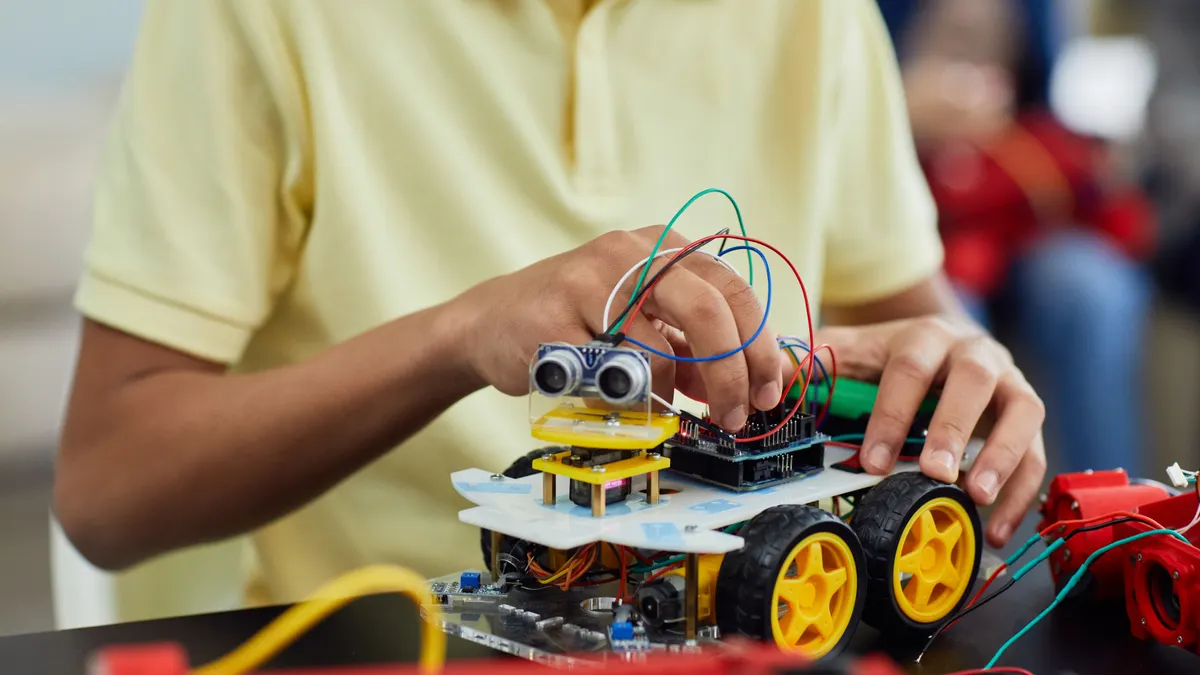
The kits that teach the most are the ones that force a child to predict, test, and adjust, not just follow a recipe to a fixed outcome. A box that produces one finished craft may entertain for an afternoon. A box that allows variation teaches more because the learner has to compare results and understand why one approach worked better.
Engineering kits often provide the strongest long-term value because they teach structure, stability, and revision. A bridge kit, a crane kit, or a marble-run system asks a child to deal with load, support, friction, angle, and balance. These are visible problems. When something collapses, the lesson is obvious. That makes engineering kits especially useful for kids who learn by doing rather than by reading. The downside is that they can become repetitive if the designs are too prescriptive.
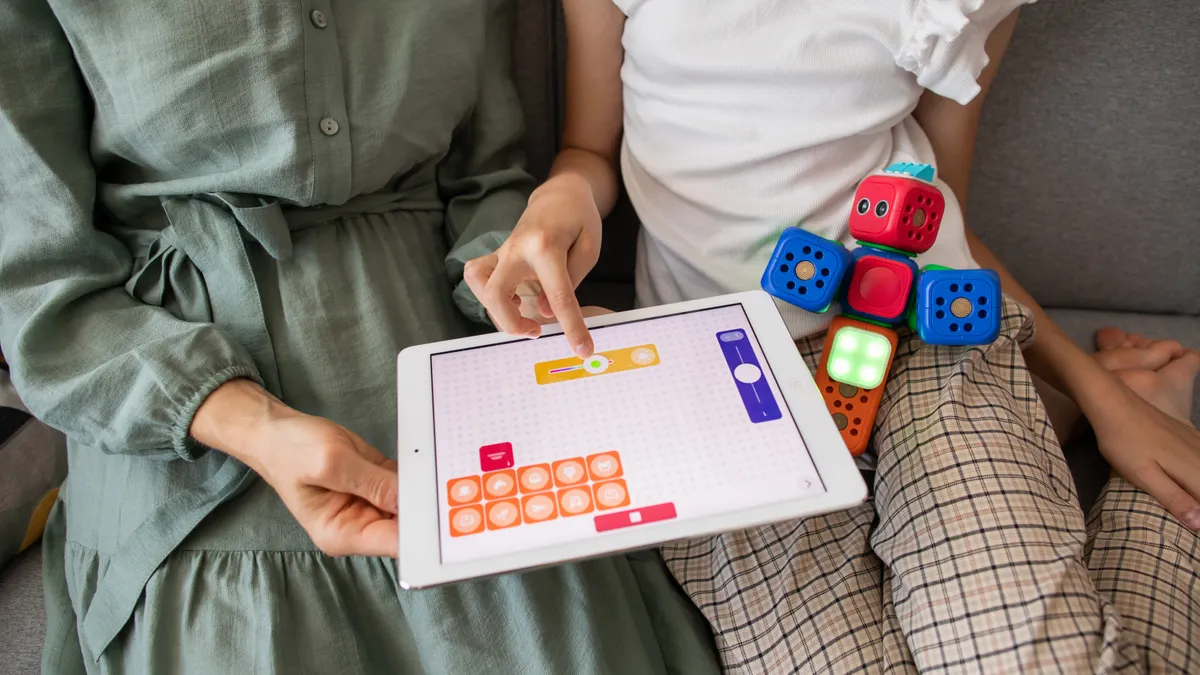
Coding kits are powerful when they move from passive screen time to active logic. A coding robot, block-coding platform, or programmable toy can teach sequencing, loops, and debugging. The best ones connect digital commands to physical movement, which gives immediate feedback. The drawback is that some coding kits hide the real learning behind bright interfaces and cartoon missions. If the child mostly taps icons without understanding cause and effect, the educational value drops.
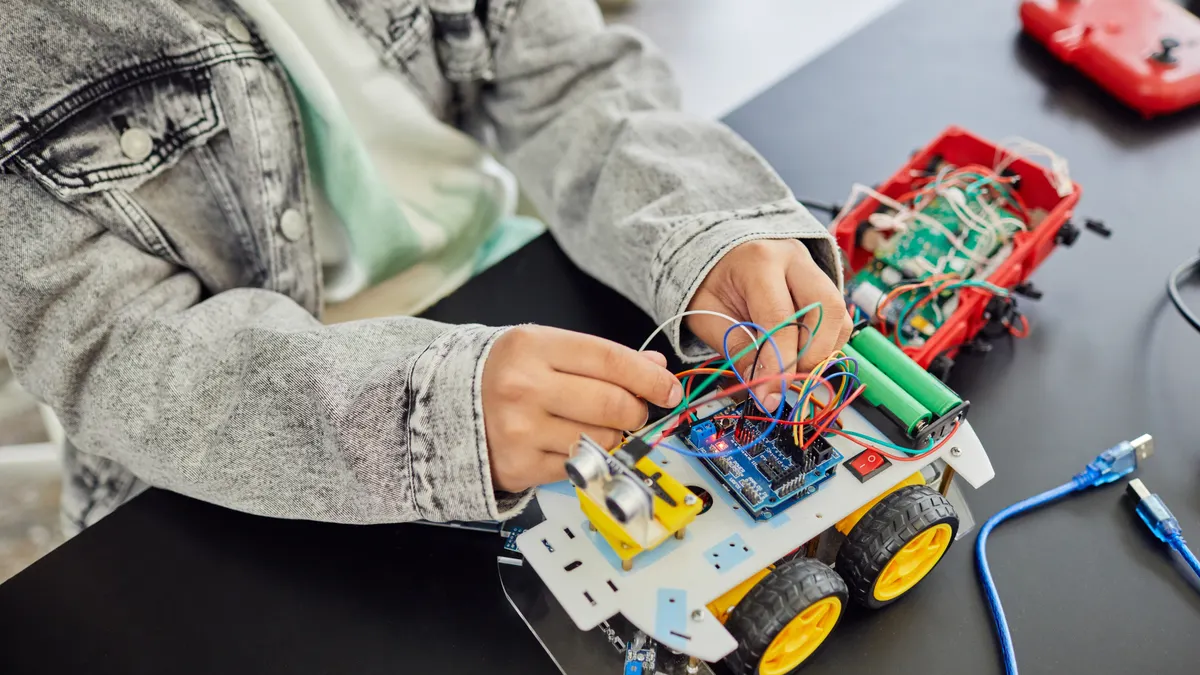
Circuit kits teach a different kind of reasoning. They show that electricity needs a path, a source, and correct connections. Snap circuits, breadboard kits for older learners, and light-and-sound projects can be excellent for visual learners. The warning here is complexity. Tiny parts, loose wires, and unclear diagrams can turn a promising kit into a mess. For younger children, snap-together systems are usually better than loose components.
Science experiment kits can be wonderful, but they vary wildly in depth. A good chemistry or biology kit should explain what is being observed, not just stage a surprise. A volcano model that foams once is less useful than a kit that compares reactions, pH, or material properties. If every activity ends with a colorful burst but no explanation, the child may remember the spectacle and forget the science. See science kits for kids and STEAM toys vs STEM toys.
Math kits are underrated when they are hands-on. Pattern blocks, geometry puzzles, fraction tiles, measurement challenges, and logic games can teach more than worksheets because they make abstract ideas touchable. These kits are especially good for children who dislike paper drills. The limitation is that math kits sometimes look plain compared with robotics or slime. That does not make them weaker; it just means adults have to value the learning, not the packaging.
The most educational kit is not always the most exciting one. A strong choice depends on the child’s current interests and the skill the adult wants to strengthen: spatial reasoning, persistence, measurement, logic, creativity, or troubleshooting.
What are the biggest mistakes parents make when buying STEM kits?
The biggest mistake is buying for the box instead of the child. A bright package, a famous franchise, or a “100 experiments” claim can hide a kit that is too shallow, too messy, or too hard. The second mistake is expecting one kit to cover science, technology, engineering, and math equally. Most kits lean hard in one direction and only lightly touch the others.
A common error is ignoring setup time. Some kits need batteries, common household items, adult prep, or cleanup space. If a kit requires a kitchen table, a sink, and half an hour of sorting before the first experiment starts, it is not a good fit for a weekday evening. The best kits make the first win easy to reach. A child who must wait 45 minutes to begin will often lose interest before the first result.
Another mistake is choosing a kit that is too dependent on adult explanation. Some kits come with weak instructions, vague diagrams, or jargon-heavy explanations. If the adult has to become the instructor, technician, and product support line, the kit has failed its main job. That does not mean adult involvement is bad. It means the kit should be usable without turning the adult into a substitute teacher.
A fourth mistake is overestimating tolerance for frustration. A 9-year-old may love building, but not love a circuit that fails because one wire is loose. A 6-year-old may enjoy science, but not if the project requires fine motor control that is still developing. The right kit challenges the learner without creating constant dead ends. A little struggle is good. Repeated failure without progress is not.
The final mistake is buying the wrong amount of content. A huge kit can look like value, but if the parts are scattered across dozens of tiny tasks, the child may never finish anything meaningful. On the other hand, a tiny kit may be perfect if the child needs a short, self-contained activity. More pieces do not automatically mean more learning. More learning usually comes from clearer design.
If the goal is a gift that gets used, the safest rule is simple: pick the narrowest kit that solves the clearest problem. Broad kits sound attractive in ads. Focused kits usually work better on the table.
What should a good STEM kit include?
A good STEM kit includes clear instructions, age-appropriate parts, a real concept, and enough room for trial and error. If one of those is missing, the kit may still entertain, but it will usually teach less and frustrate more.
Instructions should be visual, direct, and broken into manageable steps. The best guides show the finished result, the order of assembly, and the common mistakes to avoid. A child does not need an essay. A child needs a path from unopened box to working result. For younger learners, pictures should do most of the work. For older learners, concise text can add depth.
The parts should be durable enough for repeated use. Flimsy connectors, weak stickers, and parts that warp after one build can kill a good idea. If the kit is about engineering or electronics, the connection points matter as much as the concept. A cheap connector that slips can destroy confidence fast. Reusability also matters. A kit that can be rebuilt in a different way offers more value than one that ends in a single final artifact.
The best kits also include some form of explanation beyond the steps. That might be a short science note, a diagram of how the mechanism works, or a challenge question that asks the child to change one variable and observe the outcome. Without that layer, a project becomes a recipe. With it, the kit becomes a lesson. For more on evaluation, see how to evaluate educational toys.
A useful kit should also have a realistic cleanup path. Loose glitter, messy glue, and tiny hardware can make a project feel like a chore for the whole household. Kits that manage mess well are easier to repeat. Repetition matters because the second run often teaches more than the first. The first run is about assembly. The second run is where the learner notices why the first run worked, failed, or felt awkward.
One more sign of quality is whether the kit supports extension. Can the child build a different version? Can a parent add household items to extend the experiment? Can the learner combine pieces into a new design? Kits with extension potential age better than kits with one fixed outcome.
What are the trade-offs of STEM kits?
The main trade-off is that convenience costs freedom. A kit saves time and supplies, but it also limits what the child can explore compared with loose materials or open-ended maker supplies. That limitation is not a flaw by itself. It is the price of structure.
A guided kit is better for a child who needs momentum. It reduces decision fatigue and gives a clear path to success. That is why kits work so well for reluctant learners, birthday gifts, rainy days, and classroom supplements. The drawback is that the child may become dependent on the instructions. If the kit is too prescriptive, there is less room for invention.
Open-ended materials, by contrast, can produce deeper creativity. Cardboard, tape, magnets, gears, blocks, and recycled parts let children redesign freely. But that freedom can also feel overwhelming. Some kids do not want a blank page. They want a strong first project and then a second attempt with modifications. A kit can be the bridge between total structure and total freedom.
Price is another trade-off. A STEM kit often costs more than buying a few raw materials because it includes design, packaging, and curated parts. The value comes from saved planning and better sequencing, not from raw component count. A cheap kit with weak instructions may be a worse buy than a more expensive one that teaches clearly and lasts through repeated use.
There is also the issue of age ceiling. Many kits are excellent for beginners and thin for advanced learners. A beginner robotics kit may be exciting for a month and irrelevant after that. A child who already knows the basics may need upgrades, add-on packs, or a more advanced platform. Families who want long-term value should look for systems, not one-off boxes.
The final trade-off is attention. STEM kits compete with screens, sports, homework, and free play. If the subject is too dry, the child will drop it. If the kit is too flashy, the novelty wears off without real learning. The sweet spot is a project that feels like play but rewards precision. That is harder to design than most packaging suggests.
Which STEM kits are not worth buying?
STEM kits are not worth buying when they promise broad learning but deliver a single novelty, when the instructions are weak, or when the parts are too fragile to survive a second use. A kit is also a poor choice if it depends on rare supplies, constant adult rescue, or a screen app that does most of the thinking for the child.
Avoid kits that advertise too many outcomes from one box. If the package claims science, coding, engineering, art, and math all at once, the actual depth is often thin. One focused skill done well is better than five skills sketched lightly. The best kits are honest about their center of gravity. They do one thing clearly and perhaps a little around the edges.
Be cautious with kits that contain many consumables but little repeatability. A chemistry set that burns through its supplies in one afternoon may feel impressive, but it offers little long-term value unless refill options exist. The same applies to slime, crystal, and reaction-heavy kits. These can be fun, but they are often more about spectacle than sustained learning.
Skip kits that require advanced adult knowledge to function. If the adult must understand circuitry, coding logic, or chemistry vocabulary just to get the child started, the box has raised the barrier too high for a typical home. A good kids’ STEM kit should be teachable from the materials in the box, not from a separate degree.
Franchise-branded kits deserve special caution. A familiar character or movie tie-in can make the product easier to gift, but branding does not improve instruction quality. It can even raise the price without improving the build. The better approach is to judge the project first and the theme second.
If a child already owns a lot of building toys, avoid kits that duplicate what is already in the bin unless they add a genuinely new mechanism. A new color of blocks is not a new learning experience. A new mechanism, sensor, or logic challenge is. For related comparisons, see educational vs entertainment toys and toys for independent play.
A practical buying checklist for parents and gift-givers
A strong STEM kit passes five checks before money changes hands: it fits the child’s age, teaches one clear concept, can be completed without major hidden supplies, includes instructions the child can follow, and offers enough durability or variation to justify the price. If a kit fails two of those five, it is usually not the right one.
Before buying, read the description for the actual activity, not the marketing sentence. “Build a robot” means very different things depending on whether the child is snapping together a motorized model, programming a rover, or assembling a decorative toy with one moving part. The same is true for “science kit,” “engineering kit,” and “coding kit.” Those labels are too broad to trust on their own.
Check the assembly burden. If the build needs a long adult prep session, decide whether that is realistic for your schedule. A Saturday project may be fine. A school-night project may not. Some kits are designed for 30 to 60 minutes; others spread over several sessions. The right choice depends on the household rhythm. If the child is younger, keep the first session short and successful.
Look for signs of depth. Is there a challenge extension? A variable to change? A way to compare results? A rerun option? Those are the features that turn a single activity into genuine learning. A kit without them may still entertain, but it will usually age quickly.
Finally, think about what happens after the first build. The best kits are not only fun on day one. They create language the child can reuse: balance, circuit, sequence, friction, input, output, variable, model. That vocabulary is part of the value. A child who can talk about what happened has learned more than a child who only finished something pretty.
Final take: the best STEM kit is the one a child will actually use
The best educational STEM kit for kids is the one that fits the child’s current stage, teaches one real concept, and leads to a visible result without turning the adult into a full-time fixer. That usually means choosing a focused kit over a flashy one, a repeatable kit over a disposable one, and a clear lesson over a box full of claims.
The wrong kit is not just the one with missing parts or a bad manual. It is the one that looks impressive and then sits untouched because it asked for too much patience, too much reading, or too much cleanup. The right kit lowers the barrier to starting and raises the payoff for finishing. See best gifts for kids who love building.
Key Takeaways
- The best STEM kits teach through action, not decoration.
- Age labels help, but the child’s patience, reading level, and fine motor skills matter more.
- Engineering, coding, circuitry, and hands-on math kits usually offer the strongest learning when they include feedback and revision.
- A kit should be specific, repeatable, and realistic about setup and cleanup.
- Kits are a poor fit when they are too broad, too fragile, or too dependent on adult troubleshooting.
- The strongest purchase is the one that matches the child’s current skill level and still leaves room to grow.
What should I buy first if I’m new to STEM kits?
Start with one focused kit that has a clear build and a clear outcome. A beginner engineering set, a snap circuit kit, or a simple coding robot is often a better first buy than a giant mixed bundle. A single strong kit shows what the child enjoys before money goes into a shelf full of mismatched boxes.
Are expensive STEM kits always better?
No. A higher price can mean better materials, stronger instructions, or a more advanced platform, but it can also mean branding and packaging. The best value comes from clarity, durability, and repeat use. A well-designed mid-priced kit can beat a costly kit that offers only one short-lived activity. See budget toys that last.
How many STEM kits does a child need?
One good kit is enough to start. After that, the next purchase should follow the child’s interest, not a shopping habit. If the first kit leads to repeated use, the next one can add a new concept or a harder challenge. If the first kit is abandoned, the problem is usually fit, not quantity.
What is the biggest sign a STEM kit will work?
The biggest sign is whether the child can understand the first step without adult translation and can see the result of the work quickly. When instructions, materials, and outcome line up cleanly, the child is more likely to stay engaged long enough to learn something real.
Drafted with AI; not yet reviewed by a person.