Last updated: October 31, 2026
Key Takeaways
- A preschool kit fits best when a child can begin and finish it with limited frustration.
- Readiness cues include motor control, attention span, and how many choices the kit asks for.
- The most reliable check is the instructions, materials, and adult workload before you pay.
- The common mistake is choosing by topic instead of task, which can turn a kit into a struggle.
Educational kits for preschoolers are age-appropriate when they match a 3- to 5-year-old’s attention span, fine motor control, and need for picture-led, play-based learning. In this guide to Educational Kits for Preschoolers: What Makes a Kit Truly Age-Appropriate, the right kit feels doable with adult supervision, not like a miniature version of a school worksheet packet.
What age-appropriate really means for preschool educational kits
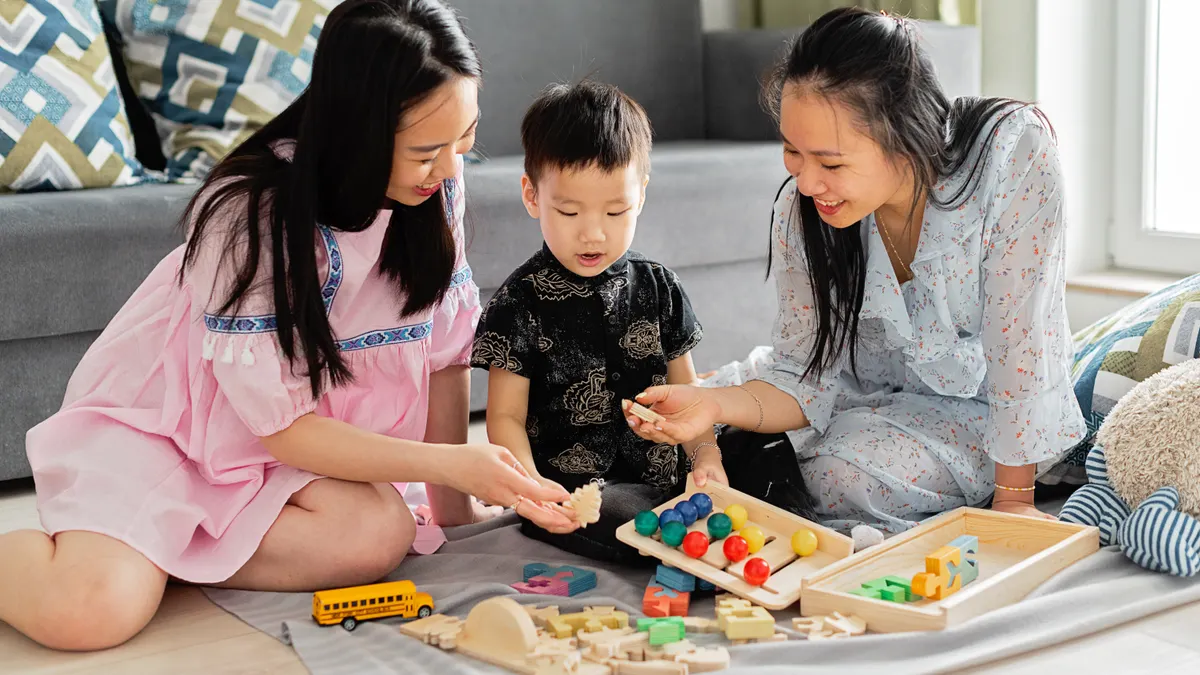
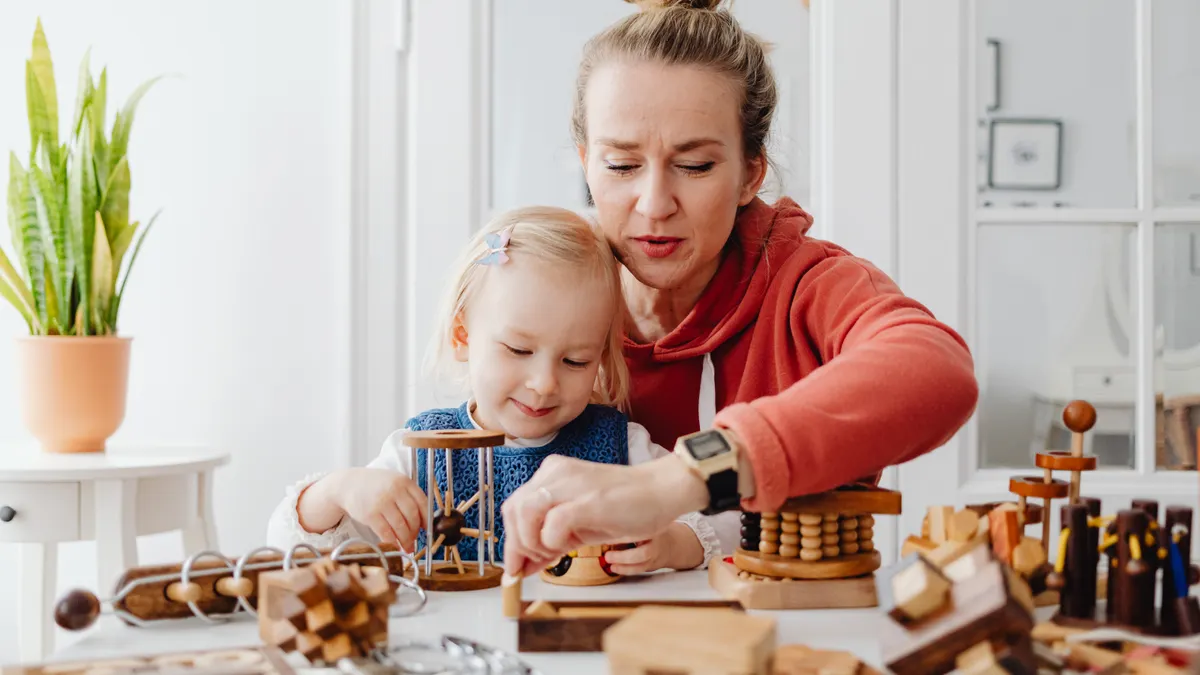
An age-appropriate preschool kit is one a preschooler can start, understand, and finish with limited frustration. That usually means 1 to 3 clear actions per activity, large parts, simple picture instructions, and results the adult can explain in plain language.
Because preschoolers are still building the hand strength and coordination needed for precise tasks, they may enjoy sorting, matching, pressing, sticking, pouring, and simple building much more than tasks that require repeated reading, tiny connectors, or long sequences. A kit that asks for 10 or 12 steps is often too much, even if the topic sounds “early learner” friendly.
A good test is this: if the activity depends on following a printed paragraph, using a small screwdriver, or waiting 20 minutes before anything happens, it is probably aimed above preschool level. Preschool kits work better when the payoff comes quickly and the adult can narrate the process as it goes.
The most useful age-fit cue is not the box art. It is the task design. Look for:
- one short goal per activity
- large, safe pieces
- picture instructions instead of dense text
- a final product or result the preschooler can see right away
- adult supervision as part of the design, not a disclaimer buried on the back
This is where many generic “educational” kits fail. They treat young learners the same and overlook the gap between a 4-year-old who can peel a sticker and a 5-year-old who can trace letters independently. A preschool educational kit should meet the lower end of that range without turning the adult into the real user; if a child’s development is unclear, consult a pediatrician, occupational therapist, or early-childhood professional for guidance, and see the AAP’s developmental milestone guidance and NAEYC’s developmentally appropriate practice resources.
The readiness signals that matter more than the age label
The readiness signals that matter are motor control, attention span, and the number of choices the kit demands. Age on the box is a starting point, not a verdict, and that is where developmental guidance from trusted sources helps.
A 4-year-old may be ready for gluing, sorting, stamping, or simple experiments that use household water, a spoon, and a cup. The same preschooler may struggle with activities that require neat cutting, repeated folding, or reading multi-step directions. That difference is why two kits labeled “ages 3+” can feel very different in real life.
Here are the signals I would look for before buying:
- Step count: 1 to 3 steps per activity is ideal; 4 steps can still work if the adult guides each one.
- Fine motor demand: large beads, peel-and-stick pieces, big knobs, and chunky tools are better than threading tiny holes or clipping small parts.
- Instruction style: pictures, arrows, and color cues beat paragraphs.
- Attention load: an activity that finishes in under 10 minutes usually fits preschool attention better than one that drags on for half an hour.
- Safety setup: materials should be non-toxic, non-sharp, and easy to supervise at a kitchen table or floor mat.
A simple way to judge fit is to ask whether the kit expects the preschooler to behave like a small student or like a play participant. Preschoolers learn best when the task still feels like play. That means sorting colored counters, matching animal cards, making a foam shape scene, or watching a simple reaction with adult help.
For safety and development, the U.S. Consumer Product Safety Commission’s small-parts guidance is worth checking before you buy. If a kit includes parts that can fit in a small-parts cylinder, it raises a clear safety question for younger preschoolers. Even when a product is not formally unsafe, tiny parts make a kit harder to use and easier to lose. The National Association for the Education of Young Children also emphasizes developmentally appropriate practice, which means matching tasks to how young children actually learn, not to how older children are taught.
What makes a preschool educational kit easy to use at home

A preschool educational kit is easy to use at home when the adult can set it up in under 5 minutes and the child can see what to do without reading a page of directions.
That ease matters because preschool use is rarely a classroom-length lesson. It is often 10 minutes after snack, 15 minutes before nap, or one activity spread across a busy afternoon. A kit that demands a clean work station, careful sorting, and a pile of specialized tools is less likely to get used at all.
Look for these home-friendly features:
- a single tray, pouch, or box that keeps the pieces together
- materials that wipe clean with a damp cloth
- no need for batteries unless the electronic part truly adds value
- instructions with photos rather than text-heavy pages
- enough repeat use to justify the setup time
Some kits look educational but are really packaging-heavy. They come with a bright box, a big claim, and a stack of one-time-use supplies. Those tend to disappoint because the preschooler finishes the “wow” part quickly and the adult is left with cleanup. A better home kit can be reset in 2 minutes and used again in a different way the next day.
This is also where simple experiments belong. Preschoolers do not need a full science kit to explore cause and effect. A kit that invites pouring, mixing, magnet play, sinking and floating, or color changes can be enough if the steps stay short and the materials are safe for adult-supervised handling. The point is not complexity. The point is an obvious result.
A home kit also needs a sensible storage plan. If pieces live in six loose bags, the kit will disappear into a cupboard by week two. If the parts fit back into one container with a labeled slot or pouch, the adult is far more likely to use it again. For more buying context, a guide to educational kits by age and readiness can help compare options without overfitting a box to its label.
A practical way to judge a kit before you buy it
The most reliable way to judge a preschool educational kit is to check the instructions, the materials, and the adult workload before you pay for it.
Use this quick process:
- Read the activity list first. Count the number of distinct tasks in one kit and look for whether each activity has 1 to 3 steps. If most activities need a long sequence, expect frustration rather than play.
- Check the smallest part. Scan for beads, discs, fasteners, magnets, or tools that look easy to swallow or hard to grasp. Large, chunky parts are usually the better preschool fit.
- Look at the pictures, not the marketing copy. If the box shows a child doing something that requires precise hand placement or independent reading, the kit may be aimed higher than the age label suggests.
- Estimate setup time. If the adult needs more than about 5 minutes to prepare one activity, the kit may be too fussy for everyday use at home.
- Ask what the preschooler will actually do. If the answer is “watch,” the kit is probably more demonstration than participation. If the answer is “press, match, sort, pour, stick, or build,” it is closer to preschool-appropriate play.
- Check the cleanup. A kit that spills glitter, tiny foam bits, or many loose pieces can turn a 10-minute activity into a 20-minute reset. That cost matters.
This process catches the most common mismatch: a kit that is technically labeled for young children but behaves like a mini school assignment. That kind of kit often asks too much of working memory and too much of small hands. The adult ends up translating every step, and the preschooler loses interest before the “learning” part lands.
It also helps to know who the kit is not for. If a child is still mouthing objects, rejects guided turn-taking, or gets overwhelmed by new materials, even a good kit may be a poor fit right now. That does not mean the child is behind. It means the format is not ready yet.
Common mistakes that make a kit too hard
The most common mistake is choosing for topic instead of task, which turns a preschool kit into a struggle.
A dinosaur kit, for example, may look perfect on the shelf, but if it expects small assembly, reading labels, and patient waiting, it is not preschool-friendly. Topic interest cannot fix a mismatch in motor demands or attention load.
The other common mistakes are predictable:
- Too many steps. A 6-step craft often becomes an adult-led project with a bored preschooler watching halfway through. The fix is to choose kits with short, repeatable actions.
- Tiny parts. Small pieces may create safety and cleanup problems even when they are technically “educational.” The fix is larger pieces or fewer loose components.
- Text-heavy directions. Long paragraphs make the adult the sole operator. The fix is visual instructions or a kit that can be modeled in one quick demo.
- Delayed payoff. Activities that need waiting, drying, or precise correction lose preschool attention fast. The fix is a faster visible result, such as stamping, sorting, or color mixing.
- Overloaded themes. Some kits try to teach letters, numbers, science, and art in one box. That sounds efficient, but it often muddies the lesson. The fix is one main skill per activity.
A kit can also be too hard because it demands emotional regulation the preschooler does not yet have. If the activity depends on “try again until it works” with no satisfying intermediate result, it may create more resistance than learning. Preschoolers often need success baked into the first attempt.
That is why “age-appropriate” is not a slogan. It is a design standard. If the kit makes the preschooler wait, copy, and self-correct too much, it may suit older siblings better. This page is for the box that should truly work at preschool level, not the one that merely advertises that it does.
What age-appropriate kits teach without feeling like school
Age-appropriate preschool kits build fine motor skills, language, early problem solving, and basic observation without demanding school-style performance.
That matters because preschool learning is usually indirect. A child who sorts pom-poms by color is also practicing hand control, vocabulary, and category thinking. A child who follows a picture to place stickers on a scene is practicing one-to-one matching and visual scanning. A child who pours water between cups is learning control, cause and effect, and volume ideas in a body-first way.
The most useful kits usually support several skill areas at once:
- Fine motor skills: pinching, pressing, peeling, placing, stacking
- Language: naming colors, shapes, animals, and actions
- Early math: counting, sorting, matching, comparing
- Science thinking: observing, predicting, noticing change
- Self-direction: completing a small task from start to finish
The useful part is that none of this has to look like a worksheet. Preschoolers often learn more from a kit that invites movement and repetition than from one that asks them to sit still and answer questions.
That said, not every skill should be packed into one box. A kit that tries to teach writing, fractions, and coding to a 4-year-old is aiming at the wrong stage. For preschoolers, the goal is readiness, not completion. If the activity strengthens hand control and curiosity, it is doing the right kind of work.
If a buyer wants to compare age fit across more than one kind of kit, the broader guide to buying educational kits by age and readiness is the right next step. That is the place for sorting options by developmental stage without forcing every preschool kit into the same mold.
The verdict: which kits I would choose, and which I would skip
I would choose preschool educational kits that use large pieces, 1 to 3 steps, picture instructions, and adult supervision built into the activity.
I would skip kits that depend on reading, tiny parts, long waiting periods, or a heavy fine-motor load with no immediate payoff. Those kits are not automatically bad; they are just better for older children or for a preschooler with unusually strong readiness in that one area. A 5-year-old who can carefully cut paper may enjoy more than a 3-year-old who still needs help holding scissors. Age labels cannot capture that difference.
The simplest rule is this: if the kit can be explained in one sentence and completed in one sitting, it is more likely to fit preschool life. If it needs repeated rescue from the adult, it probably belongs somewhere else.
A truly age-appropriate preschool educational kit does not just look cute. It respects how preschoolers actually move, focus, and learn. That is what makes it worth keeping on the shelf instead of returning to the closet.
What is a good educational kit for a 4-year-old?
A good educational kit for a 4-year-old is one with large pieces, picture instructions, and activities that take about 5 to 10 minutes. It should focus on one main skill, such as sorting, matching, stamping, or a simple experiment with adult supervision. If the child needs to read, cut precisely, or follow many steps alone, the kit is probably too advanced.
How do you know if a kit is too advanced for preschool?
A kit is too advanced for preschool if it needs more than 3 or 4 steps, uses very small parts, or depends on reading and fine control the child does not yet have. If the adult must talk through every move and the preschooler mostly watches, the kit is not a good developmental fit. The task should feel playable, not like homework.
What skills do preschool educational kits build?
Preschool educational kits build fine motor skills, early language, sorting and matching, basic counting, and simple problem solving. They can also support attention, turn-taking, and observation when the activity is short and hands-on. The most effective kits use play-based learning rather than long instructions or worksheet-style tasks.
Drafted with AI; not yet reviewed by a person.