Last updated: October 31, 2026
Quick Answer: A strong educational kits for mixed-age siblings choice usually has at least 2 levels of play, one shared theme, and enough pieces for both children to work at the same time.
Key Takeaways
- Shared theme, different tasks: a mixed-age sibling kit should let both kids participate at their own level.
- Look for one goal, two entry points, and an easy way to split the work.
- Adaptable kits use open-ended parts and clear instructions without making adults do everything.
- Shared learning works best when both siblings have meaningful roles at once.
Educational kits for mixed-age siblings work best when one kit includes a shared core and at least two ways to play, build, or learn at different levels. In this guide to Educational Kits for Mixed-Age Siblings: How to Choose One Kit for Two Kids, that is the whole problem to solve: one purchase, two kids, different abilities, no one stuck waiting.
The kit needs to serve both siblings without turning into two separate products

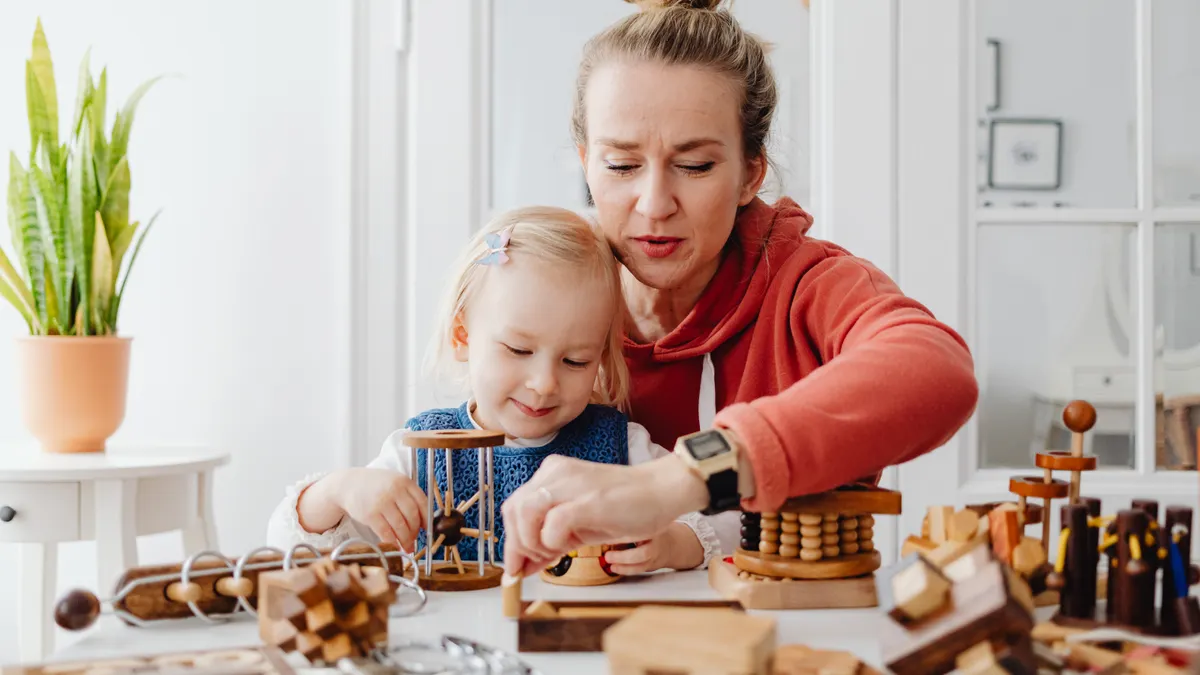
A good mixed-age sibling educational kit gives both children the same theme but not the same task. The older sibling should be able to take on the harder layer, while the younger sibling can still participate in a simpler part of the same activity. That is the difference between family learning and a kit that quietly becomes a fight over turns.
Start by looking for activities that naturally split into parallel tasks. A marble run, for example, can let one child sort pieces or follow a picture guide while the other plans a taller route or tests angles. A coding toy can let one child use block cards and the other use more steps or a companion challenge. A science kit may include a shared setup with two levels of recording, such as drawing observations for one child and writing a short hypothesis for the other.
The wrong fit is a kit built around one narrow skill that must be done exactly one way. If the kit depends on reading several pages of instructions, using tiny parts, or completing a single sequence in under 15 minutes, the younger child often ends up sidelined. The older sibling then carries the whole activity, which defeats the purpose.
I would skip kits that are marketed only by age band and not by flexibility. Age labels can help with safety and complexity, but they do not tell you whether the kit supports mixed-age use. Look instead for words like “open-ended,” “multiple builds,” “challenge cards,” “extension activity,” or “adult-led instruction.” Those phrases usually signal that the same box can stretch across skill levels.
A useful test is simple: can two children touch the same kit at the same time without competing for one tiny tool? If the answer is yes, you are closer to a shared-use kit than a single-child kit. For families with siblings two to four years apart, that matters more than a shiny promise on the front of the box.
How do you choose one educational kit for two different ages?
Therefore, choose the kit by checking for one shared goal, two levels of entry, and one clear way to divide the work. That is a practical way to avoid buying a box that only truly fits one sibling.
Use this order when you compare kits:
- Find the core task. Pick a kit with one main theme, such as circuits, chemistry, engineering, or art science, so both children can stay inside the same activity for 20 to 40 minutes.
- Look for a split in difficulty. Make sure the kit offers at least one basic path and one extension path, such as picture assembly plus written prediction, or simple sorting plus design challenges.
- Check the materials count. A kit with duplicate tools, enough pieces for two hands-on roles, or reusable parts is easier to share than a kit with one special item that must be passed back and forth.
- Read the instruction style. Instructions that rely on diagrams, icons, and short steps usually work better for mixed ages than dense paragraphs or a single long worksheet.
- Ask how supervision changes. Some kits can be done with light supervision from a parent at the table. Others need adult-led instruction the whole time because of heat, sharp parts, liquids, or tiny connectors.
- Check for a repeatable finish. A good kit should allow a second round with a different outcome, so the younger child can try again after watching the older one.
If you want a practical rule, choose the kit that can be used in three modes: solo help, paired work, and a quick extension. A robotics kit with snap-together pieces is a stronger mixed-age choice than a kit that expects one exact build. A sticker-based map activity with one matching path and one open-ended prompt is stronger than one worksheet with no variation.
The cost of choosing badly is not just wasted money. It also creates household friction, because one sibling gets bored while the other gets stressed. The right kit lowers that pressure by giving each child a role that feels real. If a younger sibling can sort, match, label, or assemble while an older sibling plans, measures, or explains, the kit is doing the job.
This is also where the hub on buying educational kits by age and readiness fits in. That page can help with broad age fit; this one is about shared use across siblings, which is a different question.
What makes a kit easy to adapt for different ages?

Because some kits are easier to stretch across ages than others, it helps to look for open-ended activities, clear parts, and room for adult-led instruction without making the adult do everything. A flexible kit can support different outcomes without forcing every child into the same exact output.
The easiest kits usually have five traits:
- Repeatable materials. Blocks, cards, counters, magnets, or reusable experiment parts let both siblings take a turn without resetting the whole project.
- Parallel tasks. One child can build while the other records, sort, or time the steps.
- Two levels of language. Picture cues help the younger child; short written prompts or extension questions help the older one.
- Visible progress. A tower getting taller, a circuit lighting up, or a drawing coming together gives both children a sense of movement.
- Adult-led checkpoints. A parent can pause the activity after 10 minutes, explain one step, and then let the children continue independently.
The phrase to look for is not “all ages.” That claim is usually too vague to be helpful. A better sign is that the kit supports family learning with layered tasks. That might mean the same experiment can be done as “observe and tell me what happened” for one child and “explain why it happened” for the other. The material is shared; the thinking is different.
One honest drawback: highly adaptable kits sometimes require more setup than simple one-off toys. More parts, more options, and more ways to use a kit can mean more decisions for the adult. If you want something that opens and runs itself in 5 minutes, a flexible sibling-friendly kit may feel like work at first. The trade-off is that it can last longer and serve more than one stage.
For example, a set with 50 tiles or blocks can support stacking, pattern making, counting, and design challenges. That single box may be less “finished” than a toy with one intended result, but it usually ages better across siblings. The same is true for art kits with several media rather than one perfect craft project. Variety is what gives the older sibling something new to do after the younger sibling has mastered the basics.
Shared learning works best when the tasks are parallel, not identical
According to the National Association for the Education of Young Children, shared learning works best when each sibling has a job that matters at the same time. The goal is not sameness. The goal is coordinated participation.
The easiest pattern is a three-role setup: one child builds or arranges, one child checks or counts, and the adult steps in only at the hard parts. In a science kit, that might look like one child pouring water, the other reading the picture card, and the adult handling a heat source or a knife. In a coding game, one child lays out the cards while the other follows the sequence on the board. Both are active, but they are not fighting over the same task.
Parallel tasks solve the most common sibling problem: unequal speed. If both children must wait for the same exact turn, the younger child gets restless and the older child gets impatient. If each has a role, the slower pace becomes part of the design. The younger child can match colors, count pieces, or predict what happens next. The older child can explain steps, compare results, or choose the harder route.
This is where adult-led instruction matters. It does not have to mean hovering. It means setting the first 5 to 10 minutes, naming the roles, and then stepping back enough for the children to work. If the instructions are too loose, the older sibling often takes over. If the instructions are too rigid, the younger sibling has nothing real to do.
A useful check is whether the activity can be split without resentment. If the younger sibling is only allowed to hand over pieces, the kit is too one-sided. If the older sibling can never move beyond the basics, the kit will feel babyish. Good shared learning gives each child a contribution that feels age-appropriate.
This is also the place to think about duration. A 15-minute activity is easier to share than a 60-minute project if attention spans are very different. Shorter sessions work better when siblings are close in age but not in patience. Longer projects are better when the kit includes checkpoints every 10 to 15 minutes, so no one is trapped in a single role too long.
What should I avoid when buying one kit for two kids?
Therefore, avoid kits that only look flexible on the box, because those usually create the most frustration. A kit can promise “multi-level learning” and still collapse into one child doing all the interesting work.
The most common mistakes are these:
- Buying by age only. Age bands can hide reading load, fine-motor demands, and safety issues.
- Choosing a single-output kit. If every child is meant to finish the same worksheet or build the same exact model, there is no real room for mixed ages.
- Ignoring supervision levels. A kit that needs constant adult help is not a good choice if you need the children to work side by side.
- Underestimating small parts. Tiny screws, beads, or connectors can frustrate younger siblings and slow everything down.
- Overvaluing complexity. More steps can mean more waiting instead of more learning.
The cost of these mistakes is predictable. The younger sibling gets excluded, the older sibling gets stuck helping, and the adult becomes the referee. That is a bad use of time and money. It also makes the kit lose novelty fast, which matters if you wanted something reusable for months instead of one afternoon.
A better move is to match the kit to the relationship between the siblings, not just their birthdays. A 6-year-old and a 9-year-old can often share an open-ended kit if the younger one can access the materials and the older one can push the challenge further. A 4-year-old and an 11-year-old may need a much wider split in tasks. The same box might still work, but only if the activity can be divided cleanly.
I would also avoid kits that depend on one sibling reading all the directions aloud to the other. That sounds collaborative, but it often turns into a bottleneck. Look for diagrams, color coding, or simple icons that let both children participate without one doing the administrative work for the other.
A simple buying checklist for mixed-age sibling kits
Next, a good mixed-age sibling kit should answer five questions before you buy it: can both children touch it, can both children think with it, can one child extend the challenge, can the adult supervise without taking over, and can the kit be used again in a different way? If the answer to any of those is no, keep looking.
Use this checklist at the product page or box:
- Does it include a shared theme? One topic keeps siblings in the same activity.
- Are there two levels of participation? Look for a basic path and an extension path.
- Are the materials reusable or plentiful? This lowers turn-taking friction.
- Can the tasks run in parallel? Sorting, building, predicting, recording, and explaining are all useful.
- Does it need light or heavy supervision? Pick the level that matches your household.
- Will it still feel fresh on day 2? Repetition should deepen the activity, not flatten it.
If a kit passes most of those checks, it is more likely to support family learning instead of splitting the kids apart. That does not mean it will be perfect for every day. Some days the younger sibling will need more help, and some days the older one will want a bigger challenge. A good kit gives enough structure to start and enough openness to stretch.
This is also where honest limits matter. No single kit solves every sibling age gap. Sometimes a shared kit plus one small add-on works best: extra paper, a second set of counters, or a notebook for the older sibling. That still counts as one family activity, but it gives each child enough space to work.
For parents comparing options, the strongest choice is usually the one that is less flashy and more adaptable. A box full of one-time surprises looks exciting. A box with multiple ways to use the same parts is usually the better buy.
When one kit is the wrong choice
Finally, one kit is the wrong choice when the age gap is large enough that the younger sibling cannot participate without constant rescue. That is especially true when the activity uses tiny pieces, dense reading, or steps that must happen in order with no pause.
It is also the wrong choice when the older sibling already knows the skill and will be bored from the start. A beginner coding kit is not a good shared pick for a child who has already moved well beyond the basics, even if the younger sibling still needs it. In that case, shared use turns into one child helping and the other pretending to be busy.
The same problem appears with highly supervised kits. Anything with heat, sharp tools, or strict sequencing can be hard to split safely across ages. If an adult has to stand over the table the whole time, the kit may still be useful, but it is not ideal for siblings who need independent roles.
A better plan in those cases is to choose a kit with a broad base and then assign different outcomes. For example, both children might use the same materials, but the younger child builds a simple pattern while the older child designs a more complex version or explains the result. If the kit cannot support that kind of split, it is not the right one for mixed-age siblings.
The Verdict: choose flexibility over age labels
Ultimately, the best educational kits for mixed-age siblings are the ones that let two children work on the same theme at different levels without turning the household into a classroom of interruptions. That means shared materials, parallel tasks, a simple base, and one clear way for each child to contribute. According to the U.S. Consumer Product Safety Commission, safety and age guidance still matter, but flexibility is what makes the kit actually usable across siblings.
For shared projects that lean practical, our hands-on learning kits page can help narrow the field. If you are building a wider at-home setup, our STEM toys for kids guide and family learning activities roundup are also useful next steps.
The final filter is simple: if the kit helps both kids start together, stay engaged together, and finish with different but equally valid outcomes, it is probably the right buy.
Drafted with AI; not yet reviewed by a person.